
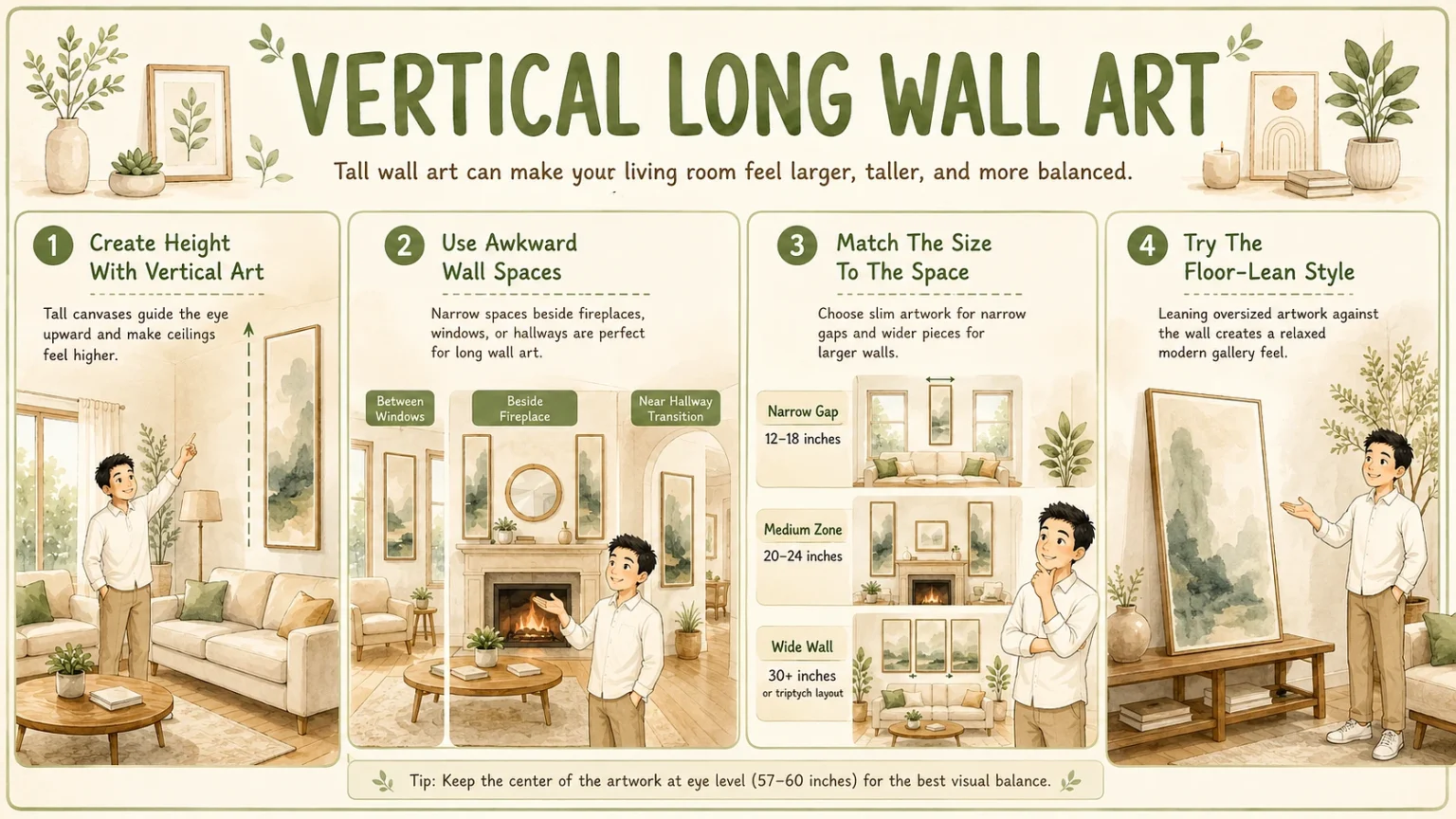
Tall canvases are the ultimate interior design hack for making a living room feel larger. By forcing the eye upward, they create the illusion of higher ceilings and perfectly fill awkward architectural “dead zones” like the narrow wall space between windows, beside fireplaces, or near entryways. For the best look, keep the center of the artwork at eye level (57-60 inches) and stick to slim, minimalist frames to maximize the vertical impact.

Elongated canvases draw the eye upward to create height.. Source: Wall Decor DelightsWhether you are designing a brand new space or refreshing a tired lounge, managing proportions is the key to a beautifully curated home. While standard horizontal paintings placed directly above the sofa are a classic choice, they don’t solve the structural quirks that many modern floor plans present. This is where vertical decor becomes essential.
What is Vertical Long Wall Art?
By definition, vertical long wall art refers to any piece of decor where the height drastically exceeds the width often featuring an extreme aspect ratio like 1:2 or 1:3. Unlike standard portrait-oriented frames (which are only slightly taller than they are wide), these highly elongated canvases are specifically engineered to emphasize verticality. They are designed to draw the viewer’s gaze from the floor to the ceiling, manipulating how we perceive the size and height of a room.
The Best Placement Spots
Every home has awkward “dead zones” that feel too narrow for standard art but too bare to leave empty. Portrait-oriented canvases are tailor-made for these exact spots:
- Between Windows: A slim, floor-to-ceiling style painting fits beautifully between dual windows, turning a structural necessity into a curated focal point.
- Beside the Fireplace: Flanking a hearth with twin towering canvases balances the heavy visual weight of the brick or stone.
- The Entry Transition: Placing a tall piece right where the lounge area meets a hallway acts as a visual anchor, cleanly defining the distinct zones of your home.
Sizing and Placement Guide
To get the most out of your elongated pieces, you need to match the width of the canvas to the specific zone you are trying to fill. Use this quick reference guide to ensure your proportions are correct:
| Wall Space Type | Recommended Art Width | Ideal Placement Strategy |
|---|---|---|
| Narrow Gap (e.g., between windows) | 12 – 18 inches | Centered exactly between the frames |
| Medium Zone (e.g., beside a fireplace) | 20 – 24 inches | Flanking both sides symmetrically |
| Wide Open Wall | 30+ inches (or Triptych) | Centered over a narrow console table |
The “Floor-Lean” Gallery Aesthetic
You do not always need a hammer and nails to make a statement. One of the most popular modern styling techniques for oversized vertical pieces (five feet or taller) is the floor lean.Instead of mounting it, simply rest a massive, framed canvas on the floor or a low wooden bench, leaning it casually against the wall. This approach adds a relaxed, contemporary studio vibe to the room while still delivering all the height-enhancing benefits of vertical lines.
Ready to Upgrade Your Space?
Finding pieces with the perfect tall proportions can be difficult in standard decor stores. If you have need a purchase item on Vertical long wall art so we have offer on it at verticled.