
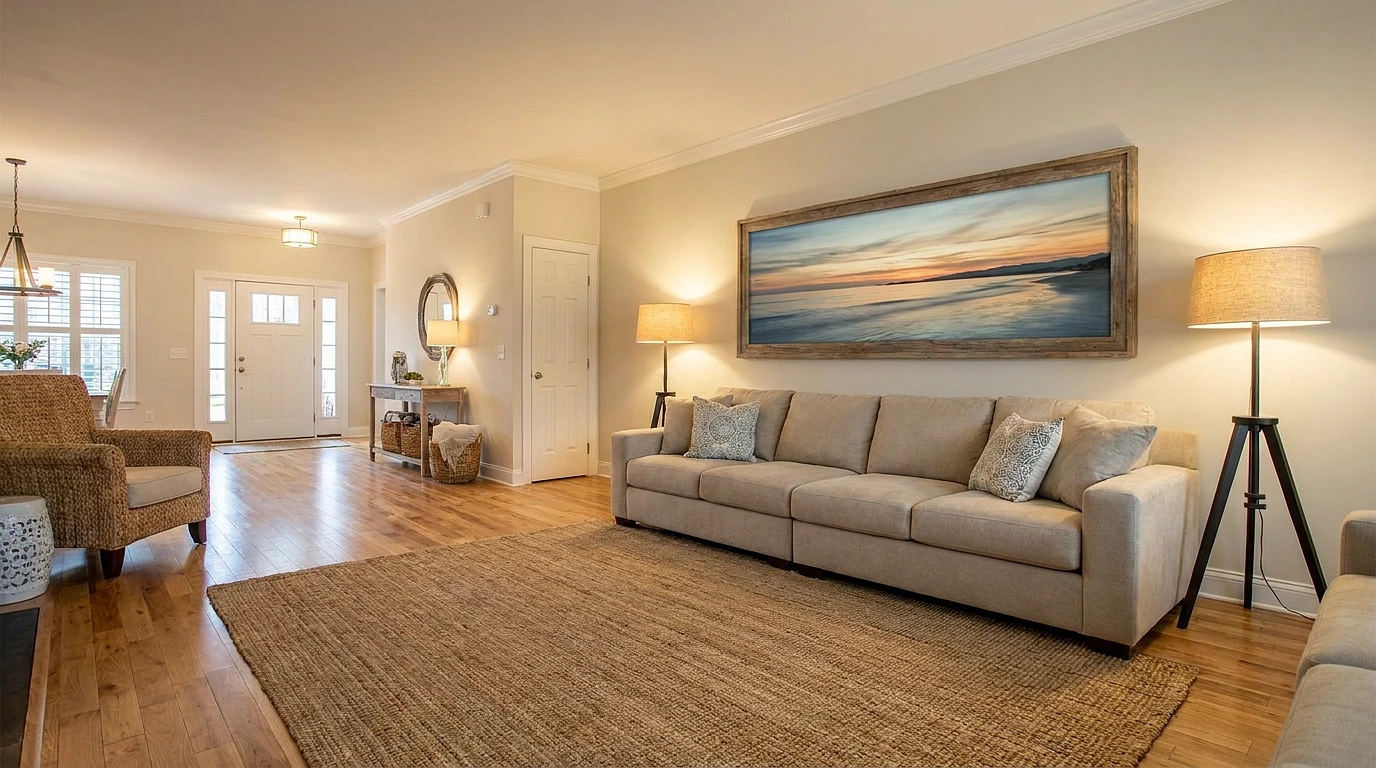
Horizontal wall art works because most furniture is horizontal. A sofa, a bed, a media console, a dining table: every anchor piece in a living room or bedroom runs wide, not tall. A wide framed canvas print placed above that furniture repeats the same visual line, which is why the room instantly reads as finished. Hang a vertical piece in the same spot and the wall looks accidental, like something got moved and never replaced.
That single principle explains almost every decision worth making about horizontal canvas art. The rest is proportion, height, and knowing what you are actually paying for when a listing says “framed canvas.”
The two-thirds rule, and what happens when you ignore it
Interior designers size art against furniture, not against the wall. The working standard is simple: the artwork should span roughly two-thirds to three-quarters of the width of the furniture beneath it. Above an 84-inch sofa, that puts you in the 56 to 63 inch range. A single 60×30 canvas lands right in the pocket. So does a set of three 20×30 panels hung with two-inch gaps.
Undersized art is the most common mistake in living rooms, and it fails in a predictable way. A 24×16 canvas floating alone above a full-size sofa does not look minimalist. It looks like a placeholder. The empty drywall on either side becomes the dominant visual element, and no amount of styling the coffee table fixes it. Something loose and gestural, like an abstract expressionist horizontal canvas, earns its keep here precisely because the sweep of the brushwork carries across the full width of the sofa instead of stopping short.

Oversized art fails differently but less often, mostly because wide-format canvases get expensive fast and people rarely overshoot. If the print extends past the arms of the sofa, the furniture starts to look like it belongs to the art rather than the other way around.
Bedrooms follow the headboard, not the bed
Above a bed, measure the headboard. A standard queen headboard runs about 62 inches wide, which means a 40×20 or 48×24 horizontal canvas sits comfortably inside it. King headboards, at roughly 80 inches, can carry a 60×30 without strain. The bottom edge of the frame should hang 6 to 10 inches above the top of the headboard. Any higher and the two elements disconnect; the art starts belonging to the ceiling.
One caveat for bedrooms specifically: skip glass. Canvas is the safer material above a bed for the plain reason that nobody wants framed glass suspended over their pillow. This is one of the quiet, practical reasons canvas dominates bedroom art while framed prints under glazing dominate hallways and offices. A soft-toned piece like this abstract sunrise panoramic print for above the bed shows the format at its best: wide enough to fill the headboard line, low enough in height to leave breathing room below the ceiling.

What “framed canvas” actually means
The phrase covers two different products, and listings rarely make the distinction obvious.
- Gallery-wrapped canvas is the canvas stretched around a wooden frame (the stretcher bars) with the image or a solid color continuing around the edges. Nothing else surrounds it. Standard stretcher depth is either 0.75 inches or 1.5 inches, and the difference matters more than it sounds. The deeper 1.5-inch profile casts a real shadow and reads as a substantial object on the wall. The slim profile can look flimsy on large horizontal pieces, where any bowing in the bars becomes visible across the long edge.
- Floater-framed canvas adds a thin outer frame, usually wood or composite, with a small deliberate gap between the canvas edge and the frame. The canvas appears to float inside it. This is the format most people picture when they read “framed canvas print,” and it typically adds 20 to 40 percent to the price. For wide formats above 40 inches, the floater frame earns its cost: it stiffens the whole assembly and keeps the long top edge from reading as a slightly wavy line over time.
The printing itself is worth one question before you buy. Ask, or check, whether the print is giclée, which in practice means pigment-based inkjet printing rather than dye-based. Pigment inks resist fading in indirect light for decades. Dye prints look identical on delivery day and noticeably washed out within a few years in a bright living room. Sellers who use pigment inks say so, loudly, because it justifies the price. Silence on the subject usually answers the question.
Panoramic ratios, and where they belong
Horizontal canvases come in a handful of standard proportions, and each one has a natural habitat.
A 3:2 ratio (36×24, 60×40) is the general-purpose format. Landscape photography, abstract work, and botanical prints all sit naturally in it, and it suits the wall above a sofa or headboard without dictating the subject matter. Painterly landscapes are the natural tenants of this ratio; a piece like this rustic village watercolor landscape reads as a window rather than a poster, which is exactly what a wide wall wants.

A 2:1 ratio (40×20, 60×30) starts to feel cinematic. City skylines, coastlines, and mountain ranges benefit from the extra width, and this is the ratio that best fills the space above wider furniture without demanding a taller wall. Subject matters here, and so does the room itself: the same landscape can look luminous or muddy depending on the direction your windows face, something we covered in detail in our guide to matching landscape paintings to your room’s light.
True panoramic ratios of 3:1 or wider (36×12, 60×20) are specialist tools. They are superb above a media console, along a staircase wall, or over a wide dresser, places where vertical space is limited but horizontal space is generous. Above a sofa they can look thin unless the ceiling is low, in which case they solve exactly that problem. Rooms with eight-foot ceilings often cannot take a 30-inch-tall canvas at proper hanging height; a 36×12 panoramic gives those rooms width and presence without crowding the ceiling line.
And if your problem wall runs the other direction, a narrow strip beside a doorway or a tall slot in a hallway, the answer flips with it. That is vertical wall art territory, and the sizing logic works differently there; we walk through it in our guide to vertical long wall art for living rooms.
A wide canvas is a commitment, which is the point
The reason a large horizontal canvas transforms a living room where a cluster of small pieces cannot is that it makes a single, legible decision. One image, one horizontal line echoing the furniture, one focal point when someone walks in. Small art asks the eye to assemble a story. A 60×30 canvas above the sofa tells it outright.
Measure the furniture first, take two-thirds of its width, and buy the piece that fills that number. Everything else, the ratio, the frame style, the pigment inks, follows from there. If you want a shortcut to what other people are already hanging, start with the current best sellers and work backward from your sofa’s tape measurement.